Dubai Islands has quietly become one of the most searched, most discussed, and most closely watched property destinations in the emirate. For investors evaluating a Dubai Islands investment in 2026, the appeal is not hype—it is fundamentals. This is a government-backed, master-planned waterfront archipelago from Nakheel, the developer behind Palm Jumeirah, positioned along Dubai’s northern coastline and built in line with the Dubai 2040 Urban Master Plan.
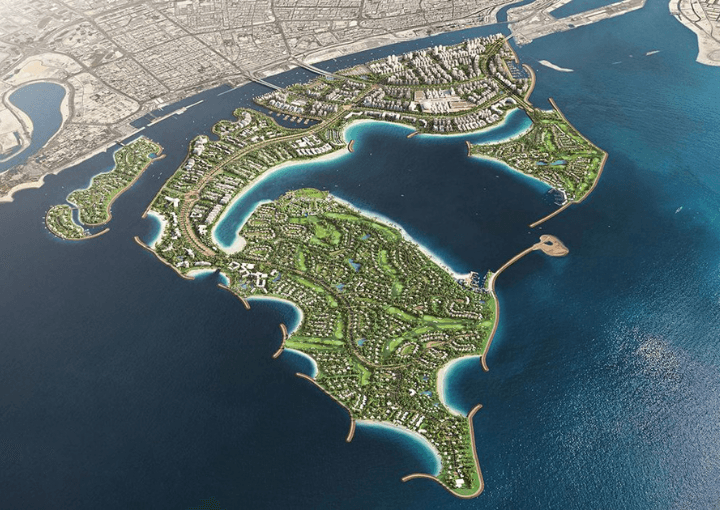
What is Dubai Islands? At its core, it is a five-island coastal city offering more than 20 kilometres of beachfront, dozens of hotels, marinas, parks, retail, and a growing collection of luxury residential developments, all within twenty minutes of Dubai International Airport.
Why are investors searching for it right now? Because the pricing window that made Palm Jumeirah, Dubai Marina, and Downtown Dubai so lucrative for early buyers is still open here. Entry prices remain meaningfully lower than established waterfront communities, while the fundamentals—government infrastructure investment, tourism growth, and genuine beachfront scarcity—point toward long-term appreciation.
Who should invest? First-time buyers looking for an accessible entry into freehold waterfront property, international investors seeking rental yield and capital growth, and end users who want a genuine coastal lifestyle without the price tag of Palm Jumeirah all have a real case to make here.
What makes this guide different from most Dubai Islands content online is that it does not stop at generic market commentary. Alongside the broader investment case, we break down the actual projects currently live on Dubai Islands, their amenities, floor plans, and positioning, so you are working with real information rather than surface-level marketing language. This guide walks through everything worth knowing before you buy, from the fundamentals of the masterplan through to expected returns, infrastructure, and the specific developments worth evaluating today.
What is Dubai Islands?
Dubai Islands is a master-planned waterfront destination developed by Nakheel, one of the most established names in Dubai real estate and the master developer behind Palm Jumeirah. Formerly known as Deira Islands, the project was rebranded and relaunched in 2022 with a new master plan vision aligned with the Dubai 2040 Urban Master Plan.
The development spans five interconnected islands, referred to as Island A through Island E, and more commonly known by their functional names:
- Central Island
- Marina Island
- Shore Island
- Golf Island
- Elite Island
Together, they cover a total area of approximately 17 square kilometres along Dubai’s northern coastline.
Each island has been designed with a distinct identity. Central Island functions as the mixed-use urban core, home to retail, dining, and cultural spaces including Souk Al Marfa. Marina Island is built around waterfront living and yacht culture, with multiple marinas planned to accommodate boats and yachts. Shore Island combines beachfront residences with sports and resort facilities. Golf Island is anchored by championship golf courses overlooking the Arabian Gulf. Elite Island is reserved for signature villas and ultra-private estates with dedicated marina access.
Across the full master plan, Dubai Islands will eventually be home to over 80 hotels and resorts, more than 20 kilometres of beaches, some of them Blue Flag certified, approximately two square kilometres of parks and open green space, multiple marinas capable of berthing hundreds of boats, and a growing retail and dining scene anchored by waterfront promenades. The islands connect to mainland Dubai via the Infinity Bridge, along with additional road and marine transport links planned by the RTA and Nakheel.
In short, this is not a single development. It is a new coastal city being built in phases, and investors buying today are entering at what is still an early stage of that build-out.
It is worth pausing on the master developer credibility here, since it is central to the investment case. Nakheel is not a newcomer testing an unproven concept. This is the same developer responsible for Palm Jumeirah, arguably the single most recognisable piece of real estate in the world, along with a range of other established Dubai communities. That track record matters when evaluating an off-plan or early-stage waterfront purchase, since delivery credibility is often the difference between a masterplan that becomes a genuine long-term asset and one that stalls midway through.
Why Dubai Islands Is Becoming Dubai’s Most Talked About Investment Destination
A few forces are converging to put Dubai Islands at the centre of investor conversation in 2026.
Waterfront Scarcity
Genuine beachfront freehold property in Dubai is a finite resource. Palm Jumeirah is largely built out and priced accordingly. Dubai Marina and JBR are mature, established markets with limited new supply. Dubai Islands represents one of the last large-scale opportunities to buy true beachfront property at a pre-maturity price point, which is precisely why early entry carries so much long-term significance.
Government Investment
This is not a private developer speculating on raw land. Dubai Islands sits within the Dubai 2040 Urban Master Plan, backed by Nakheel, a government-linked master developer with a track record of delivering some of the city's most iconic communities. That level of institutional backing reduces a layer of risk that off-plan buyers often have to underwrite in less established locations.
Infrastructure
Road connectivity through the Infinity Bridge, planned metro and transport links, marina infrastructure, and utility networks are being built in parallel with residential towers, rather than promised for some undefined future date. This is infrastructure-led growth, not infrastructure that lags behind sales.
Tourism
With more than 80 hotels planned across the islands and Dubai's broader tourism sector continuing to expand, Dubai Islands is positioned to become a genuine hospitality and leisure hub, not just a residential suburb. That tourism pipeline directly supports short-term rental demand for investors.
Luxury Demand
Dubai continues to attract high-net-worth individuals, remote professionals, and international investors seeking tax-efficient, freehold real estate. Waterfront communities consistently outperform inland developments during periods of strong demand, and Dubai Islands is positioned to capture a meaningful share of that appetite.
Taken together, these five forces explain why Dubai Islands has moved from a niche developer announcement in 2022 to one of the most actively searched property terms in the Dubai market by 2026. Investors are not simply reacting to marketing; they are responding to a genuinely rare set of conditions: institutional backing, finite beachfront supply, and a pricing structure that has not yet caught up to the fundamentals underneath it.
Top 12 Reasons to Invest in Dubai Islands
-
Prime Waterfront Location
Dubai Islands sits directly on the Arabian Gulf, offering genuine sea views and beach access rather than a canal or marina backdrop. Few remaining freehold communities in Dubai can offer true waterfront positioning at this stage of development.
-
Close to Dubai International Airport
The islands are roughly 15 to 20 minutes from Dubai International Airport, a meaningful advantage for investors targeting short-stay travelers, layover guests, and international tenants who value convenience over distance.
-
Limited Beachfront Supply
As established coastal communities like Palm Jumeirah reach full capacity, the pool of genuine freehold beachfront property in Dubai continues to shrink. Dubai Islands is one of the few locations still offering new beachfront supply at scale.
-
Strong Capital Appreciation Potential
Because Dubai Islands is still early in its development curve, current pricing sits below what a mature coastal hub typically commands. As infrastructure, hotels, and retail come online, the gap between early entry pricing and mature market value is expected to narrow, which is where capital appreciation potential lies.
-
High Rental Yield
Gross rental yields across Dubai Islands are competitive with, and in some cases ahead of, other prime coastal communities, with reported figures in the range of six to eight percent for well-positioned apartments and higher potential in the short-term rental segment. For investors comparing yield across Dubai's major communities, this places Dubai Islands firmly among the stronger-performing waterfront options without requiring the higher entry price associated with more established addresses.
-
Luxury Tourism Growth
With more than 80 hotels and resorts planned across the five islands, Dubai Islands is being built as a genuine hospitality and leisure destination. That tourism infrastructure directly benefits residential investors through sustained visitor demand and brand recognition for the area.
-
Flexible Payment Plans
Developers across Dubai Islands, including Fakhruddin Properties, offer structured payment plans that spread costs across the construction period and beyond, making off-plan investment more accessible without requiring full capital upfront.
-
Premium Lifestyle
Beyond the investment case, Dubai Islands offers a genuine lifestyle proposition, including waterfront promenades, wellness amenities, golf courses, marinas, and beach clubs, all within a single interconnected community.
-
World-Class Hotels
The presence of internationally recognised hotel brands and resort operators across the islands adds a layer of prestige and price support that newer, unbranded communities typically lack in their early years.
-
Infrastructure Expansion
Road networks, the Infinity Bridge, marina facilities, and utility infrastructure are being developed in tandem with residential towers, reducing the lag between purchase and livability that investors often face in other emerging communities.
-
Future Metro and Connectivity
As Dubai's transport network continues to expand under the Dubai 2040 Urban Master Plan, Dubai Islands is positioned to benefit from improved connectivity to the wider city over the coming years, further supporting long-term desirability.
-
Long-Term Investment Potential
Full completion of the Dubai Islands master plan is expected over the coming years, meaning investors buying today are positioning themselves ahead of a multi-year growth trajectory rather than entering a market that has already peaked. Real estate cycles reward investors who identify credible growth stories before they become widely recognised, and Dubai Islands, backed by Nakheel and aligned with a citywide masterplan through 2040, fits that description more convincingly than most emerging communities in Dubai today.
Dubai Islands vs Palm Jumeirah vs Dubai Creek Harbour
Investors frequently compare Dubai Islands against Dubai's two other major waterfront and lifestyle destinations. Here is how they stack up.
| Feature | Dubai Islands | Palm Jumeirah | Dubai Creek Harbour |
|---|---|---|---|
| Entry Price | Lower, most accessible | Higher, established premium | Medium |
| Growth Potential | Very High | Moderate | High |
| Beachfront | Yes, extensive | Yes, established | Partial, creek facing |
| Off-Plan Availability | Excellent | Limited | Good |
| Luxury Hotels | Growing | Established | Growing |
Palm Jumeirah remains the more mature, higher price per square foot destination, with a proven rental market and established service charge behavior. Dubai Creek Harbour offers strong growth potential with a skyline-focused, urban waterfront identity, but only partial beachfront access. Dubai Islands sits distinctly at the accessible end of this comparison, offering genuine beachfront property with the strongest remaining upside of the three, precisely because it has not yet reached full maturity.
Expected ROI
Return on investment in Dubai Islands comes from two distinct sources: capital appreciation and rental demand. Investors typically approach the two differently depending on their strategy.
Capital appreciation potential stems directly from the community's early-stage pricing relative to its long-term positioning. As hotels open, retail matures, and the wider masterplan takes shape, established beachfront districts in Dubai have historically commanded maturity premiums, proven retail, stabilised rental patterns, and predictable service charges. Dubai Islands has not yet reached that stage, which is where the appreciation opportunity sits for patient investors.
Rental demand is supported by the community's dual appeal to both long-term residents and short-term visitors. Holiday homes and short-term rentals benefit from the area's resort positioning and proximity to the airport, making it attractive to layover travelers and vacationers seeking an island lifestyle. Long-term rental demand is supported by the growing residential population and improving infrastructure, with newer buildings typically carrying lower maintenance costs than older, established districts.
It is worth being direct here: no property investment carries guaranteed returns, and Dubai Islands is still a developing community with delivery timelines, market cycles, and supply pipelines that can shift. Investors should underwrite any purchase based on realistic assumptions, verified project timelines, and their own risk tolerance, rather than headline yield figures alone.
A practical way to approach ROI on Dubai Islands is to separate the two strategies rather than blending them. Investors prioritising rental income should focus on smaller, well-located units close to the beach and promenade, where tenant demand is strongest and turnover costs are lower. Investors prioritising capital appreciation should focus on developer credibility, project positioning, and buying earlier in the construction cycle, since that is where the largest pricing gap between off-plan and eventual ready value tends to exist. Many experienced investors in Dubai ultimately blend both strategies, holding through the construction period for appreciation, then transitioning to a rental income model once the unit is handed over.
Infrastructure Driving Growth
The pace and credibility of infrastructure delivery is one of the strongest arguments for investing in Dubai Islands now rather than waiting.
Road connectivity through the Infinity Bridge already links the islands to mainland Dubai, with additional internal road networks planned by the RTA and Nakheel to support the community as it scales. Waterfront promenades are being developed alongside residential towers, creating walkable, connected public spaces rather than isolated developments.
Hotels are opening in phases, with operational properties already welcoming guests and a pipeline of more than 80 planned across the islands. Retail is following a similar trajectory, anchored by destinations like Souk Al Marfa, with additional dining and shopping infrastructure planned as the residential population grows.
Healthcare and schools are part of the long-term masterplan, positioning Dubai Islands as a self-sufficient community rather than one reliant entirely on the mainland for daily needs. Entertainment and leisure infrastructure, including golf courses, marinas, and beach clubs, are similarly being phased in alongside residential delivery, rather than treated as an afterthought once towers are complete.
For investors, this sequencing matters more than it might first appear. Communities where infrastructure lags years behind residential handover often struggle with early tenant demand and depressed rental performance in their first few years. Dubai Islands' approach of building roads, marinas, hotels, and retail in parallel with residential towers reduces that risk considerably, meaning early buyers are less likely to face a prolonged gap between moving in and having a fully functional community around them.
Who Should Invest?
Dubai Islands appeals to a genuinely broad range of investor profiles, though the reasons differ.
First-time investors benefit from the relatively accessible entry pricing compared to Palm Jumeirah, combined with flexible payment plans that reduce the upfront capital required to enter the market.
International buyers are drawn to Dubai's freehold ownership structure, zero property tax, zero capital gains tax, and zero income tax on rental income, all of which apply fully within Dubai Islands' designated freehold zones.
Holiday home buyers find genuine appeal in the community's resort positioning, beachfront access, and proximity to the airport, all of which support strong short-term rental performance.
Families are increasingly considering Dubai Islands as schools, parks, and community infrastructure mature alongside residential towers, offering a genuine long-term living environment rather than a purely transactional investment.
End users who want to live in what they buy are attracted to the lifestyle proposition, beach access, wellness amenities, and a coastal identity that is difficult to find elsewhere in Dubai at this price point.
Rental investors focused purely on yield are drawn to the combination of competitive gross rental returns and lower maintenance costs associated with newer buildings, both of which support stronger net returns over time.
Whichever profile you fall into, the underlying advice is consistent. Dubai Islands rewards buyers who take the time to evaluate specific projects rather than the destination alone. Two developments on the same island can differ significantly in completion timeline, amenity offering, and target buyer, which is exactly why the project-by-project breakdown below matters more than a generic community overview.
Best Projects in Dubai Islands
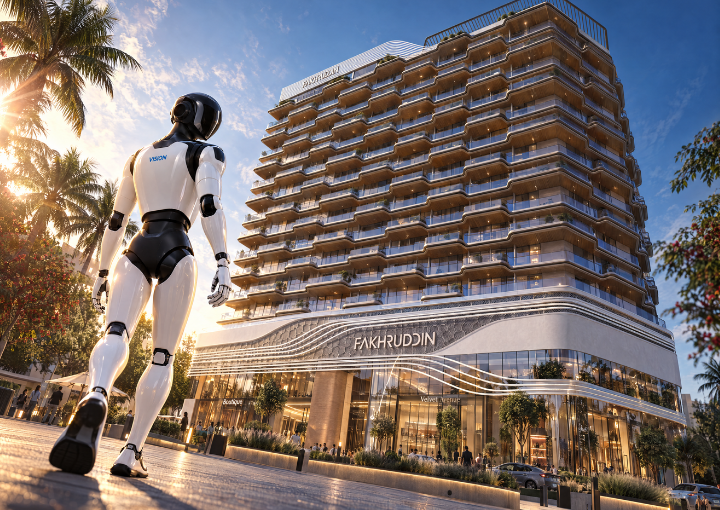
Fakhruddin Properties currently has three developments live on Dubai Islands, each targeting a slightly different segment of the market while sharing a common thread: wellness-led design and genuine waterfront positioning.
Hatimi Residences
Hatimi Residences is positioned as a retreat rooted in mindful wellness, sitting directly on the waterfront with uninterrupted sea views and easy access to both the promenade and the beach, just two minutes away. The development is designed across a twin-tower façade with more than 12 amenities, including a seaview jacuzzi, greenhouse café and lounge, infinity swimming pool, aqua gym, flotation spa, koi pond, outdoor calisthenics area, health club, yoga and aerobics deck, sunken cabanas, rooftop sundeck, kids pool, and kids play area.
Floor plans range from one-bedroom apartments starting at 822 square feet through to four-bedroom penthouses at approximately 4,590 square feet, with three-bedroom duplex and four-bedroom duplex layouts also available.
Hatimi Residences is scheduled for completion in Q4 2026, making it the nearest-term handover among the three projects and a strong option for investors seeking a shorter runway to rental income.
Tréppan Serenique
Tréppan Serenique is positioned as the UAE's first residential community built around the science of longevity, designed to support cellular health, mental clarity, and sustained wellbeing rather than short-term resort indulgence alone.
It offers more than 53 resort-style experiences spanning therapeutic and recovery facilities such as hyperbaric oxygen therapy, red light therapy, flotation therapy, cryotherapy, a Himalayan salt brick sauna, cold and hot plunge pools, and dedicated male and female spas.
Additional amenities include an infinity swimming pool, rooftop sea-view infinity pool, private courtyard, jogging track, indoor and outdoor gym, mini golf course, wall climbing, bamboo oxygen park, meditation pods, koi pond, hydroponics, and an outdoor cinema.
Floor plans span two-bedroom units from 980 to 1,483 square feet and three-bedroom units from 1,807 to 1,901 square feet.
Completion is scheduled for Q1 2028, positioning Serenique as the longer-term hold within the portfolio, well suited to investors prioritising capital appreciation over a longer horizon.
Tréppan Living Privé
Tréppan Living Privé brings a distinct wellness and design pedigree to the table, developed with global brand ambassador John Abraham, who comes from a family of architects and plays an active role in shaping the project's design vision around discipline, balance, and performance-driven living.
Privé is a 65-residence waterfront tower positioned second row from the beach, integrating wellness infrastructure into every element of daily life, including NASA-grade Airocide air purification and centrally purified, organically mineralised, hydrogenated alkaline water systems throughout the building.
The development offers more than 46 amenities across social and lounge spaces, work and café areas, water experiences including an infinity pool and endless pool, wellness facilities including a sauna, steam room, cryotherapy, red light therapy, and hyperbaric chamber, fitness zones, and dedicated kids and recreation areas.
With only 65 residences in total, Privé offers a genuine exclusivity angle that the other two projects, by scale, cannot match, making it a strong fit for buyers prioritising rarity and brand story alongside wellness positioning.
Together, these three developments give investors a genuine choice across timeline, price point, and lifestyle positioning, all while remaining within the same waterfront community and benefiting from the same underlying Dubai Islands growth story.
Future of Dubai Islands
Looking ahead, Dubai Islands is positioned to evolve from an emerging waterfront community into one of Dubai's defining coastal destinations over the coming years.
Tourism will likely be the most visible driver of that shift, as more of the planned 80-plus hotels and resorts open their doors and the islands build a genuine hospitality identity distinct from Palm Jumeirah or Dubai Marina. Hospitality growth, in turn, tends to support residential values and rental demand, creating a reinforcing cycle between tourism and property investment.
Luxury demand is expected to continue concentrating in waterfront communities as Dubai's population of high-net-worth residents and international investors grows, and Dubai Islands is well positioned to capture a share of that demand given its combination of beachfront access, government backing, and still-accessible pricing.
Waterfront development across the five islands will continue in phases, with marinas, retail, parks, and golf courses gradually filling in around the residential towers already under construction, moving the community closer to the fully realised vision Nakheel first unveiled.
Long-term urban planning, anchored in the Dubai 2040 Urban Master Plan, ensures Dubai Islands is not developing in isolation but as part of a coordinated citywide strategy, one that prioritises infrastructure, connectivity, and sustainable growth over rapid, unplanned expansion.
As more residential towers reach handover over the next few years, expect the community's identity to sharpen further. Early Dubai Islands developments have leaned heavily into wellness and longevity positioning, a theme that appears consistently across Hatimi Residences, Tréppan Serenique, and Tréppan Living Privé alike, suggesting the destination may carve out a distinct niche within Dubai's property market: waterfront living built specifically around health, recovery, and intentional daily life, rather than luxury for its own sake.
For investors weighing where to place capital in Dubai's 2026 property market, Dubai Islands represents a rare combination of genuine beachfront freehold property, institutional backing, and a pricing window that has not yet caught up to the destination's long-term trajectory. That combination is worth understanding now, while it still exists.